

Introduction
Cyber threats are becoming more advanced every day, and businesses are feeling their impact more than ever. From small companies to large enterprises, no organization is fully safe without strong digital protection in place. This is exactly where the importance of cyber security comes into play.
Today, cyber attacks are not just technical problems—they can directly affect business operations, customer trust, and long-term growth. A single data breach can damage a company’s reputation and lead to serious financial losses.
This growing concern is also reflected globally. The cybersecurity industry is expanding rapidly, with the market valued at around USD 271.88 billion in 2025 and expected to reach USD 663.24 billion by 2033, growing steadily as more businesses invest in stronger protection.
For businesses in competitive markets like New Jersey, where IT and network solutions are critical for daily operations, understanding the importance of cyber security in business has become essential.
In simple terms, if a business is connected to the internet, cyber security for business is no longer optional—it is a necessity for survival, stability, and trust.
Key Takeaways
- Cyber security helps protect business data, systems, and reputation from cyber threats.
- It reduces the risk of financial loss, data breaches, and operational downtime.
- Strong security builds customer trust and supports business growth.
- It is essential for safe, stable, and smooth business operations.
What is Cyber Security in Business?
Cyber security in business refers to protecting a company’s digital systems, networks, and data from cyber threats like hacking, malware, and unauthorized access. It ensures that business information stays safe and operations run smoothly.

In simple terms, cyber security for business helps protect sensitive data, maintain system security, and safeguard a company’s reputation. It is a key part of modern business operations.
Understanding the importance of cyber security helps businesses reduce risks and prevent serious damage before it happens.
Importance of Cyber Security in Business
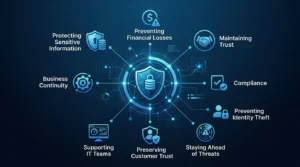
The importance of cyber security in business goes far beyond just protecting computers—it plays a key role in securing data, maintaining trust, and ensuring smooth operations. Every modern business depends on digital systems, which makes cyber security a critical part of daily functioning.
1. Protecting Sensitive Information
One of the biggest reasons cyber security is important is to protect sensitive business data. Companies store valuable information such as customer details, financial records, employee data, and business plans. Without proper security, this data can easily be accessed or stolen by cybercriminals, leading to serious damage.
2. Preventing Financial Losses
Cyber attacks can be extremely costly. Businesses may suffer losses from ransomware attacks, fraud, system downtime, or recovery expenses. Strong cyber security helps reduce these financial risks by preventing attacks before they happen.
3. Maintaining Trust and Confidence
Trust is everything in business. When customers share their personal information, they expect it to be safe. A secure system builds confidence, strengthens relationships, and improves the overall reputation of the brand.
4. Ensuring Business Continuity
Cyber attacks can shut down systems, interrupt services, and stop business operations. Effective cyber security ensures that even in case of an attack, businesses can quickly recover and continue working without long disruptions.
5. Compliance with Regulations
Many industries follow strict data protection laws and compliance standards. Strong cyber security helps businesses meet these requirements, avoid legal issues, and maintain a professional reputation in the market.
6. Preventing Identity Theft
Hackers often target personal and business identities for misuse. Cyber security systems help prevent unauthorized access and protect both employees and customers from identity theft.
7. Supporting IT Teams
Modern cyber security tools make it easier for IT teams to monitor systems, detect threats early, and respond quickly. This reduces workload and improves overall system protection.
8. Preserving Customer Trust
A single data breach can damage customer trust instantly. On the other hand, a secure business environment reassures customers that their data is safe, helping build long-term loyalty.
9. Staying Ahead of Evolving Threats
Cyberthreats are always evolving and getting more sophisticated. Strong cyber security ensures businesses are always prepared for new types of attacks and vulnerabilities.
Common Cyber Security Threats Businesses Face
Modern businesses face a wide range of cyber risks that make the importance of cyber security more critical than ever. These threats can affect data, systems, and overall business performance if not properly managed.
1):- Phishing Scams
Phishing remains one of the most common cyber attacks, where attackers send misleading emails or messages to trick employees into revealing sensitive business information.
2):- Ransomware Attacks
Ransomware can lock entire business systems and demand payment for data recovery. This type of attack can halt daily operations and cause significant financial and reputational damage.
3):- Malware and Viruses
Malicious software can enter systems through unsafe downloads, links, or attachments. Once installed, it can steal data, corrupt files, or disrupt business processes.
4):- Internal Security Threats
Sometimes security risks come from within an organization. Employees with access to sensitive systems may accidentally or intentionally compromise data security.
5):- Poor Password Security
Weak or reused passwords remain a major vulnerability, allowing hackers to easily break into systems and access confidential information.
These common threats clearly show why cyber security for business is not optional but essential for protecting operations and maintaining trust.
Impact of Poor Cyber Security on Businesses
Weak or poorly managed security can have serious consequences for any organization, which is why the importance of cyber security cannot be ignored. When businesses fail to protect their systems and data, the damage often goes far beyond just technical issues.
1):- Data Breaches and Information Loss
One of the biggest risks is data breaches, where sensitive customer or business information gets exposed or stolen. This can lead to long-term trust issues and operational challenges.
2):- Business Downtime and Disruption
Cyber attacks like ransomware or system failures can bring daily operations to a complete stop. This downtime affects productivity, customer service, and revenue.
3):- Loss of Customer Trust
When customers feel their data is not safe, they may stop doing business with the company. Rebuilding trust after a breach is often difficult and time-consuming.
4):- Legal and Compliance Issues
Many industries have strict data protection rules. A security failure can result in legal penalties, lawsuits, and compliance violations.
5):- Financial Losses
From recovery costs to ransom payments and lost business opportunities, cyber incidents can create heavy financial pressure on organizations.
How to Protect Your Business Data and Reputation
Understanding the importance of cyber security is not enough—businesses must also take practical steps to protect their systems, data, and reputation. A proactive approach to security can significantly reduce risks and prevent costly cyber incidents.
1):- Strong Password Policies
Using strong, unique passwords for all systems is one of the simplest yet most effective ways to improve security. Businesses should also encourage regular password updates to reduce the risk of unauthorized access.
2):- Regular Software Updates
Keeping software, applications, and systems updated helps fix security vulnerabilities that hackers often exploit. Outdated systems are one of the easiest targets for cyber attacks.
3):- Firewall and Network Security
Firewalls serve as a barrier of defense between external threats and internal networks. Proper network security ensures that only authorized traffic is allowed into business systems.
4):- Employee Training and Awareness
Employees play a key role in cyber security. Regular training helps them recognize phishing attempts, suspicious links, and other common threats, reducing human error.
5):- Data Backup and Recovery Plans
Regular backups ensure that important business data can be restored in case of an attack or system failure. This minimizes downtime and data loss.
6):- Multi-Factor Authentication (MFA)
Adding an extra layer of security beyond passwords, such as OTPs or authentication apps, makes it much harder for attackers to gain access.
By implementing these measures, businesses can strengthen their defenses and truly understand the importance of cyber security in business in protecting both operations and reputation.
Also Read: What Is Cyber Security? A Simple Guide for Business Owners
FAQ’s
Q1):- Is cyber security necessary for all types of businesses?
Ans:- Yes, cyber security is necessary for all businesses, regardless of size or industry. Any business that uses digital systems or stores data is at risk of cyber threats.
Q2):- What is the main goal of cyber security?
Ans:- The main goal of cyber security is to protect business data, networks, and systems from cyber threats. It ensures information remains safe, secure, and accessible only to authorized users.
Q3):- What happens if a business ignores cyber security?
Ans:- If cyber security is ignored, businesses can face data breaches, financial losses, legal issues, operational downtime, and loss of customer trust. Even a small security gap can lead to major damage.
Q4):- What is the role of cyber security in business continuity?
Ans:- Cyber security ensures business continuity by preventing attacks that can shut down systems or operations. It helps businesses recover quickly and keep running even after a cyber incident.
Conclusion
The importance of cyber security in today’s digital world cannot be ignored. Businesses must protect their data, systems, and reputation as cyber threats continue to grow in complexity and frequency.
Strong security helps prevent financial losses, data breaches, and operational disruptions while also building customer trust and ensuring business continuity. This clearly shows the importance of cyber security in business for long-term success.
For professional protection and IT support, Techproc, an IT company in New Jersey, helps businesses stay secure and prepared for evolving cyber threats.