
Introduction
Cyberattacks are becoming more frequent, more advanced, and more costly for businesses. From phishing emails and ransomware to cloud breaches and insider threats, companies today face a wide range of digital risks that can interrupt daily operations in seconds.
Unlike traditional security measures that focus only on blocking attacks, cyber resilience is about being prepared for the unexpected. It ensures that even if a cyberattack happens, your business can continue operating, recover quickly, and minimize downtime.
In simple terms, what is cyber resilience? It is the ability to protect systems, respond to incidents, restore data, and maintain business continuity during cyber disruptions.
As businesses become more dependent on technology, building cyber resilience has become one of the smartest ways to safeguard long-term success.
In this blog, we’ll explain what cyber resilience means, why it matters for businesses, and how the right strategy can help reduce risk and strengthen continuity.
Key Takeaways
- Businesses need to be ready to handle cyber threats and recover quickly.
- Recovery planning is just as important as preventing attacks.
- Common risks include ransomware, phishing, and network breaches.
- The right tools and IT support help reduce downtime and keep operations running.
What Is Cyber Resilience?
Cyber resilience is a business’s ability to prepare for, respond to, and recover from cyber threats while keeping operations running smoothly. It goes beyond preventing attacks and focuses on how quickly a company can recover and restore services after an incident.
In simple terms, it means protecting systems, detecting threats early, responding effectively, and minimizing downtime during disruptions.

Real-world data shows why this matters. In one major incident, a simple file deletion caused widespread flight delays across the United States, highlighting how even small disruptions can impact large systems.
Looking ahead, cyber risks are growing rapidly. Reports suggest that by 2031, ransomware attacks could occur every few seconds, leading to global losses of over $265 billion annually. This clearly shows why businesses need to focus not just on protection, but also on fast recovery and continuity.
Why It Goes Beyond Basic Cybersecurity
Traditional cyber security focuses on preventing attacks, but cyber resilience focuses on surviving and recovering from them.
This is especially important because around 60% of security breaches involve human error, such as clicking malicious links or sharing sensitive information unknowingly.
It highlights that even the best security tools are not enough without employee awareness and fast response systems.
Why Cyber Resilience Matters for Business
In today’s digital world, cyber threats can disrupt businesses of any size. A single attack can lead to downtime, financial loss, data breaches, and damage to customer trust. This is why cyber resilience has become essential for modern businesses.
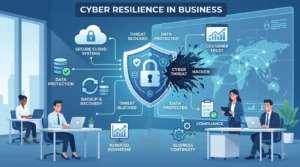
A strong cyber resilience strategy helps organizations stay prepared, respond quickly, and recover with minimal disruption.
1):- Reduces Downtime and Financial Loss
Downtime can be costly. Cyber resilience helps businesses restore systems faster through backup solutions and recovery plans, reducing both operational delays and financial impact.
2):- Protects Sensitive Business Data
Businesses handle valuable data every day, from customer details to financial records. Cyber resilience helps protect this information and ensures it can be restored quickly if compromised.
3):- Maintains Customer Trust
Quick recovery during a cyber incident helps businesses maintain customer confidence and protect their brand reputation.
4):- Supports Business Continuity
Cyber resilience ensures that critical operations continue even during cyberattacks, helping businesses stay productive and serve customers without major interruptions.
5):- Helps Meet Compliance Requirements
A strong resilience framework also supports compliance by improving risk management, access controls, and incident response processes.
In simple terms, cyber resilience helps protect both your operations and your long-term business growth.
How Is Cyber Resilience Different From Cybersecurity?
Although the terms are often used together, cyber resilience and cybersecurity are not the same. Cybersecurity focuses on protecting systems from threats, while cyber resilience takes a broader approach by ensuring the business can continue operating and recover quickly if an incident occurs.
Here’s a simple comparison:
Aspect |
Cybersecurity |
Cyber Resilience |
Main Focus |
Preventing cyber threats |
Preventing, responding, and recovering from threats |
Goal |
Protect systems and data |
Maintain operations during and after an attack |
Key Areas |
Firewalls, antivirus, access controls |
Backup, recovery, incident response, business continuity |
Approach |
Protection-based |
Protection + recovery-based |
Business Impact |
Reduces attack risk |
Minimizes downtime and disruption |
In simple terms, cybersecurity helps stop attacks, while cyber resilience helps businesses stay operational even if an attack happens.
What Tools Are Used for Cyber Resilience?
Building strong cyber resilience is not just about having a strategy — it also depends on using the right tools and technologies. These tools help businesses prevent threats, detect suspicious activity, recover quickly, and keep critical operations running during a cyber incident.
Below are some of the essential cyber resilience technologies businesses should have in place:
Essential Cyber Resilience Technologies
Category |
Tools |
Purpose |
Prevention |
Firewalls, Antivirus |
Block unauthorized access and malware |
Detection |
SIEM, Intrusion Detection |
Spot threats in real time |
Recovery |
Backup Solutions, DR Tools |
Restore operations post-incident |
Access Management |
IAM, MFA |
Limit access to authorized users |
Data Security |
Encryption Tools |
Safeguard data integrity |
Intelligence |
Threat Intelligence Platforms |
Provide actionable threat insights |
Using the right mix of these tools helps businesses strengthen their security posture and improve response time during cyber threats. More importantly, they support business continuity by reducing downtime and protecting sensitive data.
What Is the Cybersecurity Framework for Cyber Resilience?
To build strong cyber resilience, businesses need more than just security tools — they need a clear framework that guides how risks are managed. One of the most trusted models for this is the National Institute of Standards and Technology Cybersecurity Framework (CSF).
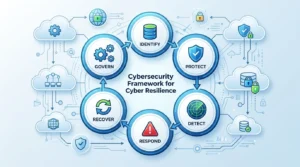
This framework helps organizations create a structured approach to managing cyber risks and improving long-term resilience. The latest version, NIST CSF 2.0, is built around six core functions that work together to strengthen security and business continuity.
1):- Govern
This function focuses on leadership, policies, and risk oversight. It helps businesses define cybersecurity responsibilities, create governance policies, and align security goals with business objectives.
2):- Identify
Before protecting systems, businesses need to know what they have. This includes identifying critical assets, business applications, data, vendors, and potential risk areas.
3):- Protect
This step focuses on putting safeguards in place, such as access controls, employee awareness training, endpoint protection, and data security measures.
4):- Detect
The detect function helps businesses identify threats early through continuous monitoring, alert systems, and anomaly detection tools.
5):- Respond
If a cyber incident occurs, businesses need a clear response plan. This includes containment steps, communication workflows, and mitigation strategies to reduce impact.
6):- Recover
The recovery function ensures systems, applications, and data can be restored quickly so the business can resume normal operations with minimal downtime.
Together, these six functions create a strong foundation for cyber resilience and help businesses stay prepared for evolving threats.
What Are the Common Cyber Threats That Test Business Resilience?
Cyber threats impact businesses of all sizes and industries. The main challenge is not just stopping attacks, but staying operational during and after them.
One major risk is ransomware, often triggered by phishing emails. In fact, 35% to 45% of ransomware attacks are linked to phishing, showing how a single email can lead to serious business disruption.
This is why strong detection, response, and recovery systems are essential for business continuity.
Here are some of the most common cyber threats that test business resilience:
1) Ransomware
Ransomware is one of the most serious cyber threats for businesses. In this type of attack, hackers lock or encrypt important files and demand payment to restore access. Without proper backups and recovery plans, it can bring operations to a complete stop.
2) Phishing Attacks
Phishing attacks usually come in the form of fake emails, messages, or websites that appear genuine. Their goal is to trick employees into sharing passwords, financial details, or clicking harmful links, making them a common entry point for cybercriminals.
3) Insider Threats
Not every threat comes from outside the business. Sometimes the risk comes from an employee, contractor, or compromised internal account. These incidents may happen by mistake or may involve intentional data misuse.
4) Cloud Vulnerabilities
As more businesses move to cloud-based systems, risks like weak access controls, exposed credentials, and incorrect security settings can leave sensitive data vulnerable.
5) Network Breaches
Hackers often target outdated software, weak passwords, or unpatched devices to gain unauthorized access to business networks and sensitive information.
Understanding these threats is the first step toward building stronger cyber resilience and ensuring faster recovery when incidents happen.
How Does Cyber Resilience Support Business Continuity?
Cyber resilience helps businesses keep running even when a cyberattack or system issue happens.
Instead of stopping operations completely, a resilient business can quickly respond, restore systems, and continue important tasks with minimal downtime. Tools like secure backups, disaster recovery plans, and cloud support make this possible.
In simple terms, cyber resilience supports business continuity by helping businesses:
- keep critical operations running
- reduce downtime
- restore data quickly
- protect customer trust
This helps businesses stay productive and prepared for unexpected cyber incidents.
Also Read: Cyber Resilience vs Cyber Security: Which One Is More Important for Your Business?
FAQ’s
Q1):- What are cyber resilience strategies?
Ans:- Cyber resilience strategies include risk assessment, threat monitoring, data backups, incident response planning, employee training, and disaster recovery plans. These strategies help businesses reduce risk and recover quickly from cyber incidents.
Q2):- How does cyber resilience reduce downtime?
Ans:- Cyber resilience reduces downtime by using backup systems, disaster recovery tools, and response plans that help restore data and systems quickly after a cyberattack or outage.
Q3):- What are the key pillars of cyber resilience?
Ans:- The key pillars of cyber resilience are prevention, detection, response, recovery, and governance. Together, these areas help businesses protect systems and maintain continuity during cyber threats.
Q4):- How does cyber resilience support business continuity?
Ans:- Cyber resilience supports business continuity by helping businesses continue critical operations, restore systems quickly, and minimize downtime during cyberattacks or IT failures.
Conclusion
In today’s fast-changing digital landscape, cyber threats are becoming more frequent and more sophisticated. That’s why understanding what is cyber resilience is no longer optional for businesses that rely on technology.
Cyber resilience is not just about preventing attacks — it is about being prepared to respond quickly, recover critical systems, and keep operations running with minimal disruption. From protecting sensitive data to reducing downtime and maintaining customer trust, a strong resilience strategy supports long-term business stability.
By using the right tools, following proven frameworks, and having expert IT support in place, businesses can build a more secure and resilient environment.
If your organization is looking to strengthen its defense against modern cyber risks, Techproc’s cyber security services, managed IT services, and business continuity solutions can help you stay protected and prepared for the future.