

Introduction
Businesses today depend on digital tools for almost everything—but with that convenience comes increased exposure to cyber threats. Attacks like phishing, malware, and ransomware are becoming more common, affecting businesses of all sizes.
Cyber security helps protect your business from these risks by securing your systems, networks, and data. Without strong cyber security protection, your business could face serious consequences, from financial loss to damaged customer trust.
The growing demand for protection is clear. The global cybersecurity market was valued at over $218 billion in 2025 and is projected to grow significantly in the coming years. This highlights the rising importance of cybersecurity for businesses worldwide.
No matter your business size, understanding cyber security for business is crucial. In this guide, we’ll explain what is cyber security, common cyber security risks for businesses, and practical steps to strengthen your protection.
Key Takeaways
- Cyber security protects your business data, systems, and networks from cyber threats.
- Small and mid-sized businesses are common targets, so cyber security for business is essential.
- Common cyber security risks for businesses include phishing, ransomware, and data breaches.
- Using the right tools and best practices helps improve cyber security protection and keep your business safe.
What Is Cyber Security?
Cyber security is the practice of protecting your business systems, networks, and data from digital attacks. These attacks can include hacking, malware, or unauthorized access to sensitive information.
In simple terms, it’s about keeping your business safe online—just like locking your office to protect physical assets.

For example, if a hacker gains access to your customer data, it can lead to financial loss and damage your reputation. That’s why having strong cyber security protection in place is essential for every business today.
Why Cyber Security Matters for Business Owners
Cyber security plays a critical role in protecting your business from financial loss, operational disruptions, and data-related risks. The reality is, cyber threats are increasing rapidly—businesses face an average of 130 cyberattacks every year, and the global cost of cybercrime has already exceeded $6 trillion. This makes cyber security for business more important than ever.
1):- Financial Losses
Cyberattacks can be expensive. From recovering lost data to fixing damaged systems, the costs can quickly add up. In some cases, businesses are forced to pay ransom just to regain access to their own data.
2):- Customer Trust and Reputation
Your customers trust you with their personal and financial information. If that data gets compromised, it can damage your reputation and make customers think twice before doing business with you again.
3):- Legal and Compliance Risks
Many industries have strict rules about how data should be protected. Failing to follow these regulations can lead to penalties and legal trouble.
4):- Operational Downtime
Cyberattacks can shut down your systems, websites, or networks, leading to lost productivity and revenue. Reports show (Accenture ) that security breaches increased by 27.4% in a single year, highlighting how quickly threats are growing.
5):- Rising Cyber Threats
The number of cyber security risks for businesses is increasing every year. Attackers are becoming more advanced, and small businesses are often their easiest targets.
This is why more companies are investing in cyber security services for business—to stay protected and avoid costly disruptions.
The Three Pillars of Cyber Security
To build strong protection against digital threats, it’s important to understand the foundation of cyber security. Every effective strategy is based on three key pillars: people, processes, and technology.
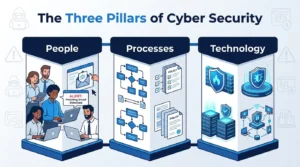
These pillars work together to create reliable cyber security systems and reduce cyber security risks for businesses.
1):- People
People are often the weakest link in cyber security for business. Even with advanced tools in place, a simple mistake—like clicking on a phishing email or using a weak password—can lead to a serious security breach.
That’s why employee awareness and training are essential. When your team understands how to identify threats and follow basic security practices, your overall cyber security protection becomes much stronger.
2):- Processes
Processes refer to the policies and procedures your business follows to stay secure. This includes access control, data protection policies, and incident response plans.
Having clear processes ensures that your team knows how to prevent threats and how to respond quickly if something goes wrong.
3):- Technology
Technology forms the backbone of modern cyber security systems. This includes tools like firewalls, antivirus software, intrusion detection systems, and monitoring tools.
These technologies help detect and prevent attacks, making them a critical part of cyber security services for business.
The Main Goals of Cyber Security
To understand how cyber security really works, it’s helpful to look at its main goals. Every cyber security system is designed to protect your business based on three core principles: confidentiality, integrity, and availability.
These goals ensure your data stays safe, accurate, and accessible when needed.
1):- Confidentiality
Confidentiality means keeping sensitive information private. Only authorized people should have access to important business data like customer details, financial records, or internal documents.
Strong passwords, access controls, and encryption are commonly used to maintain confidentiality and strengthen cyber security protection.
2):- Integrity
Integrity focuses on keeping your data accurate and unchanged. It ensures that no one can alter or tamper with your information without permission.
For example, if financial data is modified by an unauthorized user, it can lead to serious business issues. That’s why maintaining data integrity is a key part of cyber security systems.
3):- Availability
Availability ensures that your systems and data are accessible whenever you need them. Cyberattacks like ransomware or DDoS attacks can disrupt access, causing downtime and loss of productivity.
Reliable backups, secure infrastructure, and monitoring tools help maintain availability and support smooth business operations.
Types of Cyber Security Every Business Should Know
Cyber security isn’t just one thing—it’s a combination of different layers that work together to protect your business. Understanding these types can help you choose the right cyber security services for business and build stronger protection overall.
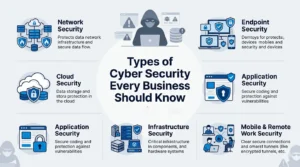
1):- Network Security
Network security focuses on protecting your internal systems from unauthorized access. It uses tools like firewalls and monitoring systems to keep hackers out and ensure safe communication within your network.
2):- Endpoint Security
Endpoint security protects individual devices such as laptops, desktops, and mobile phones. Since employees often access business data from multiple devices, securing each endpoint is essential to reduce cyber security risks for businesses.
3):- Cloud Security
As more businesses move their data to the cloud, cloud security has become a key part of cyber security for business. It helps protect sensitive information stored on cloud platforms from breaches and unauthorized access.
4):- Application Security
Application security focuses on protecting the software your business uses. This includes fixing vulnerabilities, updating applications, and preventing attackers from exploiting weak points.
5):- Infrastructure Security
Infrastructure security covers critical systems like servers, data centers, and hardware. It ensures that both physical and digital assets are protected from threats.
6):- Mobile & Remote Work Security
With remote work becoming more common, businesses need to secure employees working from different locations. This includes protecting home networks, mobile devices, and remote access systems.
Common Cyber Threats Businesses Face
No matter the size of your company, cyber threats are a real concern. Understanding the most common risks can help you take the right steps to improve cyber security for business and avoid costly damage.
1):- Malware and Ransomware
Malware is harmful software designed to damage systems or steal data. Malware that locks your files or systems and demands payment to unlock them is known as ransomware. These attacks can completely disrupt business operations.
2):- Phishing Attacks
Phishing is one of the most common cyber threats. It usually comes in the form of fake emails or messages that trick employees into sharing sensitive information like passwords or financial details.
3):- Data Breaches
A data breach happens when unauthorized users gain access to confidential business information. This can include customer data, employee records, or financial information.
4):- DDoS Attacks
Distributed Denial-of-Service (DDoS) attacks flood your website or server with traffic, causing it to crash or become unavailable. This can lead to downtime and lost revenue.
5):- Insider Threats
Not all threats come from outside. Employees or internal users can sometimes misuse access or make mistakes that lead to security issues.
6):- Emerging AI-Based Attacks
Cybercriminals are now using advanced technologies like artificial intelligence to create smarter and more targeted attacks. These threats are harder to detect and require stronger cyber security systems.
How Does Cyber Security Work for Businesses?
Cyber security might sound complex, but the way it works can be understood in a few simple steps. Most modern cyber security systems follow a structured approach to protect businesses from threats and minimize damage.
1):- Identify Risks
The first step is to identify potential vulnerabilities in your systems. This could include outdated software, weak passwords, or unsecured networks. Recognizing these risks early helps prevent future issues.
2):- Protect Systems
Once risks are identified, the next step is to put protection in place. This includes using tools like firewalls, antivirus software, and secure access controls to block potential attacks.
3):- Detect Threats
Even with protection, threats can still occur. That’s why continuous monitoring is important. Cyber security systems track activity and detect any unusual behavior that may indicate an attack.
4):- Respond to Incidents
If a threat is detected, quick action is necessary. This step involves containing the attack, removing the threat, and preventing it from spreading further.
5):- Recover and Improve
After the issue is resolved, systems are restored using backups, and improvements are made to prevent similar attacks in the future.
Essential Cyber Security Tools Businesses Use
To build strong protection against digital threats, businesses rely on a combination of tools and technologies. These tools are a key part of modern cyber security systems and help prevent, detect, and respond to attacks effectively.
1):- Firewalls
Firewalls act as the first line of defense. They monitor incoming and outgoing traffic and block any suspicious activity before it enters your network.
2):- Antivirus & Anti-Malware Software
These tools scan your systems to detect and remove harmful software like viruses, ransomware, and spyware. They play a crucial role in maintaining cyber security protection.
3):- Intrusion Detection Systems (IDS)
Intrusion detection systems continuously monitor your network for unusual behavior. If any suspicious activity is detected, they alert your team so quick action can be taken.
4):- Encryption Tools
Encryption protects sensitive data by converting it into unreadable code. Data cannot be read without the correct decryption key, even if it is intercepted.
5):- Access Control Systems
These systems ensure that only authorized users can access specific data or systems. This reduces the risk of unauthorized access and internal threats.
6):- Endpoint Protection
Endpoint protection secures individual devices like laptops, desktops, and mobile devices. Since these are common entry points for attacks, protecting them is essential for reducing cyber security risks for businesses.
Best Cyber Security Practices for Business Owners
Having the right tools is important, but following the right practices is what truly strengthens your protection. By adopting simple and consistent habits, businesses can significantly reduce cyber security risks for businesses and improve overall security.
1):- Use Strong Passwords and MFA
Always use strong, unique passwords for different accounts. Adding multi-factor authentication (MFA) provides an extra layer of security, making it harder for attackers to gain access.
2):- Keep Systems Updated
Regular updates and patching help fix security vulnerabilities. Outdated software is one of the most common entry points for cyberattacks.
3):- Train Your Employees
Employees should know how to identify phishing emails, suspicious links, and other common threats. Awareness is a key part of cyber security for business.
4):- Regular Data Backups
Backing up your data ensures you can recover quickly in case of a ransomware attack or system failure. Always store backups securely.
5):- Secure Your Network
Use secure Wi-Fi networks, strong encryption, and proper access controls to protect your business infrastructure.
6):- Conduct Regular Security Assessments
Routine checks help identify weaknesses in your systems before attackers do. This allows you to fix issues early and maintain strong cyber security protection.
FAQ’s
Q1):- Why is cyber security important for businesses?
Ans:- Cyber security for business helps protect sensitive data, prevent financial loss, and ensure smooth operations without interruptions.
Q2):- What are common cyber security risks for businesses?
Ans:- Common cyber security risks for businesses include phishing attacks, ransomware, malware, and data breaches that can disrupt operations.
Q3):- What are cyber security services for business?
Ans:- Cyber security services for business include threat monitoring, data protection, risk assessment, and incident response to keep systems secure.
Q4):- Do small businesses need cyber security?
Ans:- Yes, cyber security for small businesses is essential because small businesses are common targets for cyberattacks due to weaker security systems.
Also Read: Cyber Resilience vs Cyber Security: Which One Is More Important for Your Business?
Conclusion
As technology becomes a bigger part of everyday business operations, the need for strong cyber security protection becomes even more important. Businesses that take cyber security seriously are better prepared to handle threats, avoid downtime, and protect their valuable data.
Cyber security for business is no longer just about installing software—it’s about creating a complete strategy that reduces cyber security risks for businesses and keeps systems secure at all times. The sooner you act, the better protected your business will be.
If you’re unsure where to start or want to upgrade your current cyber security systems, getting expert support can save you time and reduce risks.
Techproc, a trusted IT company in New Jersey, offers tailored cyber security services for business to help you build a secure, reliable, and future-ready business environment.