


Introduction
In today’s digital world, cyberattacks are not a matter of “if” but “when.” Businesses are facing increasing pressure to protect their systems, data, and customers.
This rising demand is clearly reflected in the market—the global cybersecurity services industry, valued at around $53 billion in 2025, is projected to grow rapidly and reach nearly $160 billion by 2033.
But here’s where things get tricky. While companies are investing more in security, many are unsure if they’re making the right decisions. Some businesses overspend on cyber security services without clear value, while others underestimate the cyber risks and spend too little.
That’s why understanding the average cost of cyber security services is so important. Without a clear idea of pricing and what’s included, it’s easy to either waste money or leave your business exposed.
In this guide, we’ll walk you through the real cyber security cost, what influences it, and how to find the right balance between protection and budget—so you can make confident, informed decisions.
Key Takeaways
- Cyber security costs vary based on business size, risk level, and service needs.
- Underinvesting in security can lead to much higher financial losses.
- A risk-based approach helps you spend smarter and avoid unnecessary expenses.
- Managed services often offer the best balance between cost, protection, and value.
What Is the Typical Cost of Cyber Security Services? (Quick Answer)
The average cost of cyber security services can vary depending on your business size and security needs, but here’s a quick snapshot:
- Small businesses: $1,500 – $4,000 per month
- Mid-sized businesses: $4,000 – $30,000 per month
- Enterprises: $20,000 – $100,000+ per month
Annually, the cost of cyber security services for businesses can range from $18,000 to $1.2M+, or about $1,300 to $3,000 per employee.
Most companies also spend around 0.2% to 0.9% of revenue or up to 10% of their IT budget on security.
In short, the average cost of cyber security services depends on how much protection your business actually needs.
What Is the Cost Breakdown of Cyber Security Services by Type?
When understanding the average cost of cyber security services, breaking it down into specific service categories makes things much clearer. Each service has its own pricing structure, and together they define the total cost of cyber security services for businesses.
Here’s a simplified table to help you quickly understand the cyber security services pricing across different service types:
1):- Managed Cyber Security Services (MSSP)
Managed services are one of the most common ways businesses handle security today. Instead of building an in-house team, companies outsource everything to experts.
In terms of cyber security services pricing, here’s what you can expect:
- Small businesses: $1,500 – $3,000/month
- Mid-sized businesses: $3,000 – $6,000/month
- Larger organizations: $8,000 – $20,000+/month
These services usually include 24/7 monitoring, threat detection, incident response, SIEM tools, and endpoint protection. For many businesses, this model offers the best balance between cost and coverage when evaluating the cost of cyber security solutions.
2):- Security Assessments & Penetration Testing
Before improving your security, you need to understand where you stand. That’s where assessments and testing come in—and they directly impact the cybersecurity risk assessment cost.
Typical pricing looks like this:
- Basic vulnerability scans: $2,000 – $5,000
- Full security assessments: $10,000 – $30,000
- Advanced penetration testing: $15,000 – $45,000
These are usually one-time or periodic costs, but they play a critical role in managing the long-term cost of cyber security services for businesses.
3):- Incident Response & Breach Management
Even with strong protection, incidents can still happen. That’s why incident response is an essential part of the overall cyber security services cost.
Here’s what businesses typically pay:
- Incident response planning: $10,000 – $25,000
- Monthly retainers: $3,000 – $8,000
- Active breach response: $300 – $500 per hour
Having a plan in place can significantly reduce the financial impact of an attack, making this a smart investment in your overall cyber security cost.
3):- Security Implementation Projects
These are project-based services focused on setting up security systems and tools. They can significantly influence the cost of cyber security solutions.
Typical costs include:
- Small businesses: $15,000 – $35,000
- Mid-sized companies: $40,000 – $100,000
- Enterprises: $100,000 – $500,000+
These projects often include firewalls, identity and access management (IAM), endpoint protection, and cloud security setups.
4):- Governance, Risk & Compliance (GRC)
For businesses that need to meet regulatory requirements, compliance becomes a key part of the cost of cyber security services.
Here’s a general pricing idea:
- Policy development: $5,000 – $15,000
- Compliance assessments: $8,000 – $20,000
- Employee training: $15 – $60 per employee annually
While it adds to the cyber security services pricing, compliance helps avoid fines, legal issues, and long-term risks.
What Are the Hidden Costs of Cyber Security Services?
When businesses calculate the average cost of cyber security services, they often focus only on monthly or project fees. But the real cost of cyber security services for businesses goes beyond that—there are several hidden costs that many companies overlook.
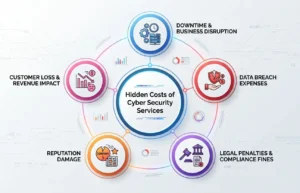
1):- Downtime and Business Disruption
A cyberattack can stop your operations completely. Even a few hours of downtime can lead to lost revenue and reduced productivity, increasing your overall cyber security cost.
2):- Data Breach Expenses
Recovering from a breach involves investigation, recovery, and customer communication. These costs can quickly exceed your regular cyber security services cost.
3):- Legal Penalties and Compliance Fines
Failing to protect sensitive data can result in heavy fines, especially for regulated industries—adding to the true cost of cyber security services.
4):- Reputation Damage
Trust plays a huge role in any business. A single security incident can damage your brand image and make customers hesitant to work with you, affecting long-term growth.
5):- Customer Loss and Revenue Impact
After a cyber incident, many customers may choose to leave due to security concerns. This leads to long-term revenue loss, which becomes a hidden but serious part of your overall cost of cyber security.
What Factors Influence the Average Cost of Cyber Security Services?
The average cost of cyber security services isn’t the same for every business. It depends on several factors that directly affect how much protection you need and how complex your setup is.
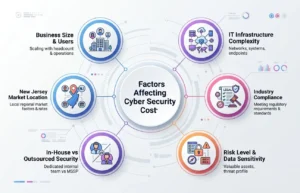
1):- Business Size & Number of Users
The more employees and devices you have, the higher your cyber security services cost. Each user adds another layer that needs protection.
2):- IT Infrastructure Complexity
Businesses using cloud platforms, remote work systems, and multiple applications usually face a higher cost of cyber security solutions due to increased complexity.
3):- Industry & Compliance Requirements
Industries like finance, healthcare, and e-commerce require strict compliance, which increases cyber security services pricing.
4):- Risk Level & Data Sensitivity
If your business handles sensitive data like customer or financial information, you’ll need stronger protection—raising the overall cyber security cost.
5):- In-House vs Outsourced Security
Managing security internally can be expensive. Many businesses reduce the cost of cyber security services for businesses by outsourcing to experts.
6):- Location (New Jersey Market)
In regions like New Jersey, demand for advanced security and compliance can slightly increase cyber security services cost.
How Are Cyber Security Services Priced?
Understanding pricing models helps you better estimate the average cost of cyber security services and choose what fits your business needs.
Pricing Model |
How It Works |
Best For |
Typical Cost Range |
Subscription-Based (Monthly Plans) |
Fixed monthly fee based on users, devices, or services |
Ongoing protection & managed services |
$1,500 – $20,000+/month |
Fixed Project Pricing |
One-time cost for defined projects like setup or audits |
Businesses with clear requirements |
$5,000 – $100,000+ per project |
Hourly Consulting Rates |
Pay per hour for expert support or consulting |
Short-term or specialized tasks |
$100 – $500+ per hour |
Retainer-Based Services |
Monthly fee for ongoing expert access |
Businesses needing continuous support |
$3,000 – $10,000+/month |
Choosing the right model can make a big difference in managing the average cost of cyber security services effectively.
How to Optimize Your Cyber Security Budget
Managing the average cost of cyber security services isn’t about cutting corners—it’s about spending smarter. With the right approach, you can reduce unnecessary expenses while still keeping your business fully protected.
1):- Use a Risk-Based Investment Approach
Focus your budget on the areas that matter most. Instead of trying to secure everything at once, prioritize high-risk areas to control the cost of cyber security services.
2):- Bundle Services for Better Value
Many providers offer bundled packages that combine multiple services. This can reduce your overall cyber security services cost by 15–25% compared to buying everything separately.
3):- Combine Managed IT and Security
Choosing a provider that offers both IT and security services can lower the cost of cyber security solutions while improving efficiency.
4):- Adopt a Hybrid Model
Use a mix of in-house support and outsourced experts. This helps balance quality and cost while optimizing the cost of cyber security services for businesses.
5):- Consolidate Security Tools
Avoid using too many separate tools. Streamlining your security stack reduces duplication and lowers your overall cyber security cost.
Also Read: What Is Cyber Resilience? Why It Matters for Business
FAQ
Q1):- What is included in cyber security services pricing?
Ans:- Cyber security services pricing typically includes monitoring, threat detection, incident response, endpoint protection, and security assessments.
Q2):- Why do small businesses need cyber security services?
Ans:- Small businesses need cyber security because they are frequent targets of cyberattacks. Investing in the cost of cyber security services for businesses helps prevent financial and data losses.
Q3):- Is cyber security an expense or an investment?
Ans:- Cyber security is an investment because it protects your business from costly cyberattacks. The average cost of cyber security services is much lower than the financial losses caused by data breaches, downtime, and legal penalties.
Q4):- What factors affect the cost of cyber security services?
Ans:- The cost of cyber security services depends on business size, number of users, IT complexity, compliance requirements, and risk level.
Conclusion
Cyber security doesn’t have to be confusing or overly expensive. The key is understanding what your business truly needs and investing accordingly.
Instead of guessing or overspending, focus on building a smart, balanced approach that protects your systems without stretching your budget. When done right, cyber security becomes a long-term asset—not just another cost.
If you’re unsure where to start or feel like you might be overpaying, it’s always a good idea to get expert guidance.
Looking for cost-effective cyber security services in New Jersey? Contact Techproc today and get a plan tailored to your business needs.