

Introduction
Cloud computing is no longer just a tech trend—it has become a core part of how modern businesses operate. In simple terms, cloud computing allows companies to store data, run applications, and manage operations over the internet instead of relying on physical servers or traditional IT systems.
In fact, the global cloud market is growing at a massive pace. The cloud computing market size was estimated at USD 943.65 billion in 2025 and is expected to reach USD 3,349.61 billion by 2033, growing at a CAGR of 16.0%. This rapid growth clearly shows how businesses are increasingly adopting cloud technology.
In 2026, the demand for types of cloud computing services continues to rise as companies look for better scalability, stronger security, and cost-effective solutions. From startups to large enterprises, businesses now rely on cloud systems to stay flexible and competitive.
In this blog, we’ll break down the different types of services in cloud computing, explain how they work, and help you choose the right cloud solution service for your business.
Key Takeaways
- The types of cloud computing services (IaaS, PaaS, SaaS, FaaS) support different business IT needs.
- Cloud computing improves scalability, security, and cost efficiency.
- Deployment models like public, private, and hybrid cloud offer flexibility and control.
- Trusted cloud computing service providers like Techproc help ensure smooth and reliable cloud operations.
What is Cloud Computing?
Cloud computing is a technology that allows businesses to store and access data, applications, and IT resources over the internet instead of using physical servers or local storage.
In simple terms, everything runs on remote servers and can be accessed anytime through the internet. This removes the need for heavy hardware and on-site infrastructure.
Businesses are quickly shifting to cloud computing services because they are more flexible, scalable, and cost-efficient compared to traditional IT systems. You can easily increase storage, run applications, or access tools without worrying about maintenance or hardware upgrades.
Why Cloud Computing is Important for Businesses in 2026
Cloud computing is a major driver of modern business growth. In 2026, companies are widely using types of cloud computing services to improve flexibility, reduce costs, and boost performance. It also supports remote work, enhances security, and helps businesses scale quickly in a competitive digital world.
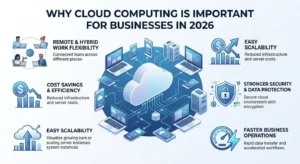
1):- Remote and Hybrid Work Flexibility
Cloud computing makes it easy for teams to work from anywhere. Employees can securely access files, tools, and applications in real time, improving collaboration and productivity.
2):- Cost Savings and Efficiency
Businesses can reduce heavy spending on hardware and IT infrastructure. With types of cloud computing services, companies only pay for what they use, making operations more cost-effective.
3):- Easy Scalability
Businesses can swiftly scale resources up or down in response to demand thanks to cloud technologies. This flexibility is especially useful for growing companies and seasonal workloads.
4):- Stronger Security and Data Protection
Modern cloud computing service providers offer advanced security features like encryption, backups, and disaster recovery, helping protect sensitive business data.
5):- Faster Business Operations
Cloud systems improve speed and efficiency by enabling quick access to data, smoother communication, and better workflow management across teams.
Types of Cloud Computing Services
Cloud computing offers different service models that help businesses manage their IT needs more efficiently. Each model serves a specific purpose, and understanding these Types of Cloud Computing Services helps businesses choose the right solution for growth, flexibility, and performance in 2026.
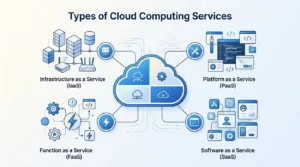
1. Infrastructure as a Service (IaaS)
Infrastructure as a Service in cloud computing provides virtual IT infrastructure like servers, storage, and networking over the internet.
What it is:
A cloud model where businesses rent IT infrastructure instead of buying and maintaining physical hardware.
How businesses use it:
- Hosting websites and applications
- Storing large amounts of data
- Running virtual machines for different workloads
Example use cases:
Startups and enterprises use IaaS to scale their infrastructure quickly without heavy investment in hardware, making it one of the most flexible Types of Cloud Computing Services.
Example:
Amazon Web Services (AWS), Microsoft Azure,Google Cloud Platform (GCE – Google Compute Engine)
2. Platform as a Service (PaaS)
Platform as a Service in cloud computing provides a complete cloud environment for developers to build, test, and deploy applications without managing the underlying infrastructure.
What it is:
A cloud model that offers tools, frameworks, and environments to simplify application development.
How businesses use it:
- Building and developing applications
- Testing software in controlled environments
- Deploying applications quickly without infrastructure setup
Example use cases:
Development teams use PaaS to speed up app creation and testing, reducing complexity and improving efficiency in modern cloud computing services.
Example:
Google App Engine, Microsoft Azure App Services
3. Software as a Service (SaaS)
Software as a Service in cloud computing delivers software applications over the internet that users can access directly through a browser.
What it is:
A cloud model where software is hosted online and accessed without installation.
How businesses use it:
- Email services and communication tools
- CRM and customer management systems
- Collaboration and productivity platforms
Example use cases:
Businesses widely use SaaS solutions because they are easy to access, cost-effective, and require no maintenance, making them the most popular among all types of cloud computing services.
Example:
Google Workspace, Microsoft 365, Salesforce
4. Function as a Service (FaaS)
Function as a Service in cloud computing is a serverless model where businesses run individual functions without managing servers.
What it is:
A cloud model that executes code in response to events without requiring infrastructure management.
How businesses use it:
- Automating workflows
- Processing real-time data
- Running event-driven applications
Example use cases:
Companies use FaaS to build scalable and efficient applications that automatically respond to system events, making it a modern part of advanced cloud computing services.
Example:
AWS Lambda, Google Cloud Functions
Deployment Models of Cloud Computing
Cloud computing is not only about service types, it also comes with different deployment models. These models define how and where cloud resources are hosted and managed. Understanding these options helps businesses choose the right setup based on security, cost, and flexibility needs in 2026.
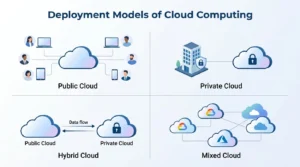
1. Public Cloud
A public cloud is one of the most widely used Types of Cloud Computing Services, where computing resources are managed by third-party providers and shared across multiple users over the internet.
What it is:
A public cloud delivers essential cloud computing services like storage, applications, and servers through the internet. These resources are hosted on shared infrastructure, making them easily accessible to different businesses without the need for physical setup.
How businesses use it:
- Hosting websites and web applications
- Running daily business operations using SaaS tools
- Storing business data and backups
- Managing workloads without owning hardware
Example use cases:
Public cloud is a great choice for startups and small to mid-sized businesses looking for cost-effective and scalable cloud computing services for business without investing in expensive infrastructure.
Example:
Amazon Web Services (AWS), Microsoft Azure, Google Cloud Platform
2. Private Cloud
A private cloud is one of the more secure Types of Cloud Computing Services, where the infrastructure is dedicated to a single organization and not shared with others.
What it is:
A private cloud provides exclusive access to cloud computing services such as storage, servers, and networking. It can be hosted either on-site or by a third-party provider, but the environment is used by only one business.
How businesses use it:
- Storing sensitive or confidential business data
- Running critical applications
- Managing internal operations
- Meeting compliance and regulatory requirements
Example use cases:
Private cloud is ideal for enterprises that need high security and control in their cloud computing services for business, especially in industries like healthcare and finance.
Example:
VMware Private Cloud, Microsoft Azure Private Cloud, IBM Cloud Private
3. Hybrid Cloud
Hybrid cloud is a flexible option among the Types of Cloud Computing Services that combines both public and private cloud environments.
What it is:
Hybrid cloud allows businesses to use both public and private cloud computing services together. Sensitive data can be stored in a private cloud, while less critical operations run on the public cloud.
How businesses use it:
- Storing sensitive data securely while using public cloud for operations
- Scaling resources during peak demand
- Running mixed workloads across environments
Example use cases:
Hybrid cloud is ideal for businesses that want a balance between security and scalability in their cloud computing services for business.
Example:
Microsoft Azure Hybrid Cloud, AWS Outposts, Google Anthos
4. Mixed Cloud
Mixed cloud is a modern approach within the Types of Cloud Computing Services, where businesses use multiple cloud platforms from different providers.
What it is:
Mixed cloud involves combining services from different cloud computing service providers instead of relying on a single vendor. This helps businesses optimize performance and reduce dependency.
How businesses use it:
- Using different providers for different workloads
- Avoiding vendor lock-in
- Improving performance and flexibility
Example use cases:
Mixed cloud is suitable for organizations that want to leverage the strengths of multiple cloud computing services providers and build a more flexible IT environment.
Example:
Using AWS for storage, Google Cloud for analytics, and Azure for applications
Benefits of Cloud Computing for Businesses
Choosing the right Types of Cloud Computing Services can bring significant advantages to businesses of all sizes. From improving efficiency to reducing costs, cloud technology has become a key driver of modern business success.
Here are some of the major benefits of using cloud computing services for business:
1):- Reduced IT Costs
One of the biggest advantages of cloud computing services is cost savings. Businesses no longer need to invest heavily in hardware, maintenance, or upgrades. Most cloud computing services providers offer flexible pricing models, so you only pay for what you use.
2):- Improved Data Security
Modern cloud computing service models come with advanced security features like data encryption, firewalls, and regular updates. This helps protect sensitive business information from cyber threats and data breaches.
3):- Business Continuity and Disaster Recovery
Cloud solutions offer automatic backups and disaster recovery options. This ensures that your business data is safe and can be quickly restored in case of system failures or unexpected events.
4):- Remote Access and Collaboration
With cloud-based tools, employees can access files, applications, and systems from anywhere. This improves teamwork and allows businesses to operate smoothly, even with remote or hybrid work models.
5):- Scalability and Flexibility
Different types of services in cloud computing allow businesses to scale resources up or down based on demand. This flexibility is especially useful for growing businesses or those with changing workloads.
Challenges of Cloud Computing
While the Types of Cloud Computing Services offer many benefits, businesses should also be aware of some common challenges before making the switch. Understanding these challenges helps in planning better and choosing the right cloud computing services for business.
1):- Data Security Concerns
Even though modern cloud computing services come with strong security features, storing sensitive data online can still be a concern for some businesses. It’s important to work with trusted cloud computing service providers and follow proper security practices.
2):- Dependence on Internet Connectivity
Cloud systems rely heavily on a stable internet connection. Without reliable connectivity, accessing data and applications can become difficult, which may impact business operations.
3):- Migration Complexity
Moving from traditional systems to cloud-based environments can be complex. Data transfer, system compatibility, and downtime are some challenges businesses may face during migration to new cloud computing service models.
4):- Ongoing Management and Maintenance
Although cloud computing services providers handle most infrastructure tasks, businesses still need proper monitoring, updates, and management to ensure smooth performance and security.
How to Choose the Right Cloud Computing Service
With so many types of Cloud Computing Services available, choosing the right one can feel overwhelming. The key is to match your business needs with the right cloud computing service models to get the best results.
Here are some important factors to consider when selecting the right cloud computing services for business:
1):- Understand Your Business Requirements
Start by identifying what your business actually needs. Whether it’s data storage, application development, or daily operations, different types of services in cloud computing are designed for different purposes.
2):- Consider Your Budget
Cost plays a major role when choosing cloud computing services. Look for flexible pricing options offered by reliable cloud computing services providers so you can scale without overspending.
3):- Check Security and Compliance Needs
If your business handles sensitive data, security should be a top priority. Make sure your chosen cloud computing service providers offer strong security features and meet industry compliance standards.
4):- Evaluate Scalability
Your business will grow, and your cloud solution should grow with it. Choose a service that allows easy scaling, which is a key benefit of modern Types of Cloud Computing Services.
5):- Look for IT Support and Expertise
Having the right support is crucial. Partnering with a provider that offers managed IT services can help you handle setup, monitoring, and maintenance of your cloud computing services for business efficiently.
Also Read: What Are Managed IT Services and How Do They Work?
FAQ
Q1):- What is an example of cloud computing?
Ans:- An example of cloud computing is using services like Google Drive, Microsoft 365, or AWS, where you store files or run applications over the internet instead of on a local computer.
Q2):- How does cloud computing work?
Ans:- Cloud computing works by storing data and running applications on remote servers that you access through the internet. Users can use these resources anytime without managing physical hardware.
Q3):- What are the 4 pillars of cloud computing?
Ans:- The 4 pillars of cloud computing are scalability, security, reliability, and cost efficiency. These factors make cloud systems flexible and suitable for modern business needs.
Q4):- What are the disadvantages of cloud computing?
Ans:- The main disadvantages of cloud computing include internet dependency, security risks, downtime issues, and limited control over infrastructure compared to on-premise systems.
Conclusion
Cloud computing has become an essential part of modern business operations, especially in 2026 where digital transformation is growing faster than ever. Understanding the types of cloud computing services—including IaaS, PaaS, SaaS, and FaaS—helps businesses choose the right model based on their needs.
Each cloud service model offers unique advantages, from cost savings and scalability to improved security and flexibility. When combined with the right deployment model, cloud computing can significantly improve business efficiency and performance.
However, selecting and managing the right solution can be challenging without expert guidance. That’s why working with experienced cloud computing service providers is important for smooth implementation and long-term success.
Looking to implement the right cloud solution for your business? Partner with Techproc, a trusted IT company in New Jersey, to plan, deploy, and manage cloud services tailored to your needs—contact us today.