


Introduction
Cyber security compliance is the process of following security laws, regulations, and industry standards to protect sensitive business data and reduce cyber risks. It helps businesses prevent data breaches, meet legal requirements, and build trust with customers.
As cyber threats continue to grow, maintaining cyber security compliance has become essential for organizations of all sizes. Industry reports estimate that global cybercrime costs will reach nearly $11.9 trillion annually, while 85% of organizations plan to increase their cybersecurity budgets to strengthen security and meet evolving compliance requirements.
In this guide, you’ll learn what cyber security compliance is, why it’s important, the most common compliance standards, and a practical checklist every business should follow to stay secure and compliant.
Key Takeaways
- Strong security practices help businesses protect sensitive data and reduce cyber risks.
- Regular updates, employee training, and system monitoring improve overall business security.
- Following compliance standards helps organizations avoid penalties and data breaches.
- Keeping software updated and using strong access controls improves overall protection.
What Is Cyber Security Compliance?
Cyber security compliance is the process of following security laws, industry regulations, and recognized standards to protect sensitive business data and IT systems from cyber threats. It helps businesses meet legal requirements, reduce security risks, and prevent costly data breaches.
Simply put, cyber security protects your systems and data, while cyber security compliance ensures those security measures meet the standards required by regulators and industry frameworks. By maintaining compliance, businesses strengthen security, build customer trust, and avoid financial and legal penalties.

Why Is Cyber Security Compliance Important for Businesses?
Cyber security compliance is important because it helps businesses protect sensitive data, reduce cyber risks, meet regulatory requirements, and build customer trust. It also strengthens overall security by ensuring the right policies, controls, and security practices are in place.
Here are the key benefits of maintaining cyber security compliance:
- Protects sensitive business data from unauthorized access and cyber threats.
- Reduces the risk of data breaches by identifying vulnerabilities and implementing security controls.
- Helps meet legal and industry regulations, reducing the risk of fines and compliance violations.
- Builds customer trust by demonstrating a commitment to protecting sensitive information.
- Improves overall security posture through continuous monitoring, risk management, and employee awareness.
What Types of Data Does Cyber Security Compliance Protect?
Cyber security compliance helps businesses protect sensitive data from cyber threats, unauthorized access, and data breaches. While the specific requirements vary by industry, most compliance frameworks focus on securing the following types of information:
1):- Personally Identifiable Information (PII)
PII includes names, email addresses, phone numbers, government-issued IDs, and other personal information that can identify an individual.
2):- Protected Health Information (PHI)
PHI includes medical records, prescriptions, insurance details, and other patient information that healthcare organizations must protect.
3):- Financial and Payment Data
This includes credit card details, bank account information, payment records, and billing data used in financial transactions.
4):- Business and Employee Data
Businesses must also secure employee records, payroll information, contracts, intellectual property, and other confidential company data.
What Are the Most Common Cyber Security Compliance Standards?
Cyber security compliance standards provide the rules and best practices businesses should follow to protect sensitive data, reduce cyber risks, and meet legal requirements. The right standard depends on your industry, the type of data you handle, and where your business operates.
Standard |
Best For |
Protects |
GDPR |
Businesses serving EU customers |
Personal data |
HIPAA |
Healthcare organizations |
Patient health information |
PCI DSS |
Businesses accepting card payments |
Payment card data |
SOC 2 |
SaaS and cloud providers |
Customer data |
ISO 27001 |
Any organization |
Information security management |
NIST CSF |
Organizations improving cybersecurity |
Overall cyber risk management |
CCPA |
Businesses serving California residents |
Consumer privacy |
SOX |
Public companies |
Financial records |
1):- GDPR (General Data Protection Regulation)
GDPR is a privacy regulation that protects the personal data of individuals in the European Union (EU). Businesses that collect or process EU customer data must follow GDPR requirements, including securing personal information and reporting data breaches.
2):- HIPAA (Health Insurance Portability and Accountability Act)
HIPAA protects patient health information in the United States. Healthcare providers, insurance companies, and related organizations must implement security controls to keep medical records confidential and secure.
3):- PCI DSS (Payment Card Industry Data Security Standard)
PCI DSS applies to businesses that store, process, or transmit credit card information. It requires organizations to secure payment data through encryption, access controls, and regular security monitoring.
4):- SOC 2
SOC 2 is a compliance framework designed for cloud service providers, SaaS companies, and technology businesses. It focuses on protecting customer data by meeting standards for security, availability, confidentiality, and privacy.
5):- ISO 27001
ISO 27001 is an internationally recognized information security standard that helps businesses identify risks, implement security controls, and continuously improve their information security management system.
6):- NIST Cybersecurity Framework
The NIST Cybersecurity Framework helps organizations strengthen cybersecurity by following five core functions: Identify, Protect, Detect, Respond, and Recover. It is widely used by businesses to improve security and manage cyber risks.
7):- CCPA (California Consumer Privacy Act)
CCPA gives California residents greater control over how businesses collect, use, and share their personal information. Organizations serving California consumers must comply with its privacy requirements.
8):- SOX (Sarbanes-Oxley Act)
SOX helps protect the accuracy and integrity of financial reporting for public companies. It requires organizations to implement strong internal controls and secure financial systems against unauthorized access or changes.
What Steps Should Businesses Follow to Maintain Cyber Security Compliance?
A cyber security compliance checklist helps businesses protect sensitive data, reduce cyber risks, and meet industry regulations by following proven security best practices. It provides a structured approach to identifying vulnerabilities, strengthening security controls, and maintaining ongoing compliance.
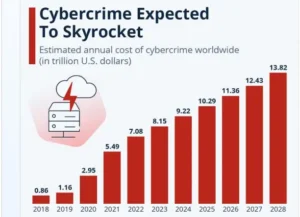
The need for a compliance checklist has never been greater. Nearly 43% of cyberattacks target small businesses, while global cybercrime costs are projected to reach almost $24 trillion in the coming years. Following the checklist below can help your business improve security, reduce the risk of data breaches, and support long-term business continuity.
1. Identify Your Compliance Requirements
Start by identifying the cyber security compliance standards that apply to your business. The requirements vary depending on your industry, business location, and the type of data you collect or process. Understanding these obligations helps you create a compliance strategy that aligns with legal and regulatory expectations.
2. Conduct Regular Risk Assessments
Perform routine risk assessments to identify vulnerabilities, security gaps, and potential threats across your IT environment. Regular assessments allow you to address weaknesses before they can be exploited and help support ongoing compliance efforts.
3. Strengthen Access Controls
Limit access to sensitive systems and data by implementing role-based permissions, strong password policies, and multi-factor authentication (MFA). Giving employees access only to the information they need reduces the risk of unauthorized access and insider threats.
4. Secure Your Network and IT Infrastructure
Protect your network using firewalls, endpoint security, intrusion detection systems, and secure remote access solutions. These security measures help defend your business against malware, ransomware, and other cyber threats while supporting compliance requirements.
5. Keep Systems and Software Updated
Regularly update operating systems, applications, and security software to fix known vulnerabilities. Timely patch management reduces the chances of cybercriminals exploiting outdated software and strengthens your overall security posture.
6. Protect Sensitive Business Data
Use encryption, secure backups, and data recovery solutions to protect critical business information. These safeguards help prevent data loss and ensure important information can be recovered if a cyber incident occurs.
7. Develop Clear Security Policies
Create documented policies for password management, remote work, acceptable device usage, and incident response. Well-defined policies help employees understand their responsibilities and promote consistent security practices across the organization.
8. Train Employees on Cybersecurity Best Practices
Provide regular cybersecurity awareness training to help employees recognize phishing emails, social engineering attacks, and other common threats. An informed workforce is one of the most effective ways to reduce security risks.
9. Monitor Systems and Maintain Audit Logs
Continuously monitor your systems for unusual activity and maintain detailed audit logs. Ongoing monitoring helps detect security incidents early while providing the documentation needed for compliance audits.
10. Conduct Regular Compliance Audits
Review your security controls through internal assessments and third-party audits to identify compliance gaps. Regular audits help ensure your business continues to meet industry standards and regulatory requirements.
11. Evaluate Third-Party Security
Assess the security practices of vendors, suppliers, and service providers before sharing sensitive business information. Working with trusted third parties helps reduce external security risks and supports overall compliance.
12. Create an Incident Response Plan
Develop a clear incident response and business continuity plan that outlines how your organization will respond to and recover from cyber incidents. Regular testing ensures your team is prepared when an unexpected security event occurs.
13. Partner With a Trusted IT Provider
Managing cyber security compliance can be complex, especially as regulations evolve. Working with an experienced managed IT and cybersecurity provider can help simplify compliance, improve security monitoring, and keep your business protected against emerging threats.
What Are the Most Common Cyber Security Compliance Challenges?
Maintaining cyber security compliance can be challenging because regulations, cyber threats, and business technologies continue to evolve. Many businesses struggle to keep up with changing requirements while protecting sensitive data and maintaining daily operations.
1):- Keeping Up With Regulations
Compliance standards and data privacy laws change regularly. Businesses must review and update their security practices to remain compliant.
2):- Limited IT Resources
Many organizations lack the in-house expertise needed to manage compliance, monitor systems, and respond to emerging cyber threats.
3):- Securing Remote Work
Remote and hybrid work environments require stronger access controls, endpoint security, and continuous monitoring to protect business data.
4):- Maintaining Ongoing Compliance
Cyber security compliance is an ongoing process. Regular audits, software updates, employee training, and continuous monitoring are essential for staying compliant over time.
How Can Businesses Maintain Long-Term Cyber Security Compliance?
Maintaining cyber security compliance requires continuous monitoring, regular updates, and ongoing security improvements. By following best practices, businesses can adapt to evolving cyber threats, meet changing regulations, and strengthen their overall security posture.
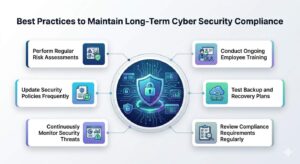
1):- Perform Regular Risk Assessments
Regular risk assessments help businesses identify new vulnerabilities, security gaps, and potential threats before they become serious problems.
2):- Update Security Policies Frequently
Cybersecurity policies should be reviewed and updated regularly to align with the latest cyber security compliance standards and business operations.
3):- Continuously Monitor Security Threats
Real-time monitoring helps organizations detect suspicious activity early and respond quickly to potential security incidents.
4):- Conduct Ongoing Employee Training
Employees should receive regular training on phishing attacks, password security, safe browsing, and other cybersecurity best practices.
5):- Test Backup and Recovery Plans
Businesses should routinely test backup systems and disaster recovery processes to ensure fast recovery during cyber incidents or system failures.
6):- Review Compliance Requirements Regularly
Compliance regulations continue to evolve, so businesses must stay informed about new cyber security compliance requirements and industry standards.
What Are the Future Trends in Cyber Security Compliance?
Cyber security compliance is evolving as businesses adopt new technologies and cyber threats become more sophisticated. Staying ahead of these trends can help organizations strengthen security, meet changing regulations, and reduce future compliance risks.
1):- AI and Automation in Compliance Management
Artificial intelligence and automation tools are helping businesses improve threat detection, automate reporting, and simplify compliance monitoring processes.
2):- Zero Trust Security Models
Zero trust security focuses on continuously verifying users, devices, and access requests instead of automatically trusting internal systems or users.
3):-Cloud Compliance and Hybrid Work Security
As more businesses move to cloud platforms and hybrid work environments, cloud security and remote access compliance are becoming major priorities.
4):- Real-Time Compliance Monitoring
Businesses are shifting from periodic audits to continuous monitoring solutions that provide real-time visibility into security and compliance activities.
5):- Growing Data Privacy Regulations Worldwide
Global data privacy laws and cyber security compliance standards are expected to continue expanding, requiring businesses to adapt their security strategies regularly.
Also Read: What Are Managed IT Services and How Do They Work?
FAQ’s
Q1):- How often should businesses conduct compliance audits?
Ans:- Businesses should conduct cyber security compliance audits regularly, including internal reviews throughout the year and third-party assessments annually or based on industry requirements.
Q2):- What happens if a business fails to meet compliance requirements?
Ans:- Failure to meet cyber security compliance requirements can result in financial penalties, legal action, reputational damage, data breaches, and loss of customer trust.
Q3):- How can managed IT services help with cyber security compliance?
Ans:- Managed IT services help businesses maintain cyber security compliance through continuous monitoring, security updates, risk assessments, compliance reporting, and proactive cybersecurity management.
Q4):- Is cyber security compliance mandatory for small businesses?
Ans:- Yes, cyber security compliance may be mandatory for small businesses depending on their industry, location, and the type of customer or financial data they handle.
Conclusion
Cyber security compliance is essential for protecting businesses from cyber threats, data breaches, and regulatory risks. By following a proper cyber security compliance checklist, organizations can secure sensitive data, reduce vulnerabilities, and improve their overall security posture.
Regular risk assessments, strong access controls, employee training, and continuous monitoring all play a key role in maintaining long-term compliance and cybersecurity protection.
Techproc is a trusted IT company in New Jersey that helps businesses strengthen cyber security compliance through IT managed services, cyber security solutions, and proactive IT support.